Rome, Unravelled 1: Caligula
📅 April 5, 2026
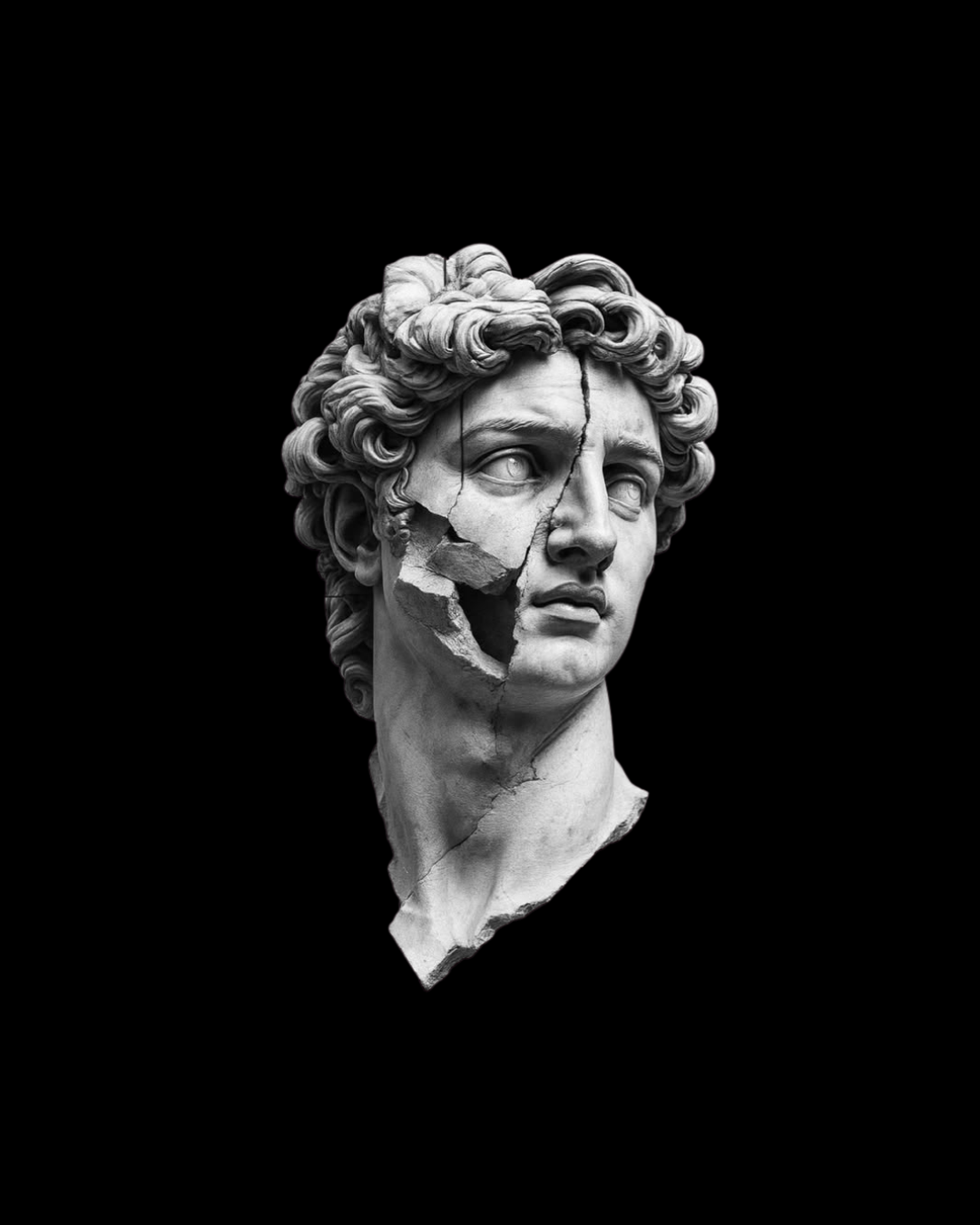
In ancient Rome, power often came at a heavy cost. It meant intrigue, plots, and conspiracy. More often, it meant a violent end. Of 105 emperors, 71 were sent to the afterlife much quicker than they would have wanted, most by assassination, the rest by execution or suicide.
Some were lucky, though (if surviving longer before being killed counts as luck). For example, the emperor Valentinian III held power for 30 years before he dispatched to heaven (or most likely, hell). Valentinian II did for 17, Licinius for 16, and Gallienus for 15. Others barely began. Emperor Otho lasted just 92 days. Pertinax did for 87. Didius Julianus, 66. And then, Quintillus, 17.
There was this assumption that those who met their end were the most tyrannical, well deserving of it. At least this is what I had thought, but it was no farther from the truth.
Let’s take, for example, the emperor Pertinax who attempted to transform the treasury and tighten discipline in the military. His approach was deemed “too strict”. He was murdered by his own guards who were so corrupt they did the unthinkable and auctioned the throne to the highest bidder. Or consider Majorian who passed laws to shield ordinary citizens from exploitation. He was betrayed by his own general who preferred to control weak emperors. And how about the emperor Aurelian, or Julian the Apostate, moderately good men. I could go on with examples.
The thing is, things like goodness and fairness rarely bought goodwill. Less scrupulous men exploited these things, seeking to maneuver and secure power for themselves. A wise emperor had to come to an early understanding of the plain, cold fact that his longevity depended on a delicate balance of fairness and ruthlessness.
The only problem with this – as is seen repeatedly– was that power, especially the massiveness of the kind they wielded, held the likelihood of drifting towards absolutism. It was not uncommon for certain emperors to begin fair, even just, only to harden into monsters. A man unaccustomed to refusal does not accept refusal easily. Even the suggestion of “no” could make him bare teeth, which is likely the starting point of terror.
For most rulers, terror was merely instrumental to compel obedience and impose their will. Most emperors were that – and had to be that– way. For a few others, though, terror became an obsession, almost a tool for passing the time.
Nero was one of those, Caligula was another.
We shall begin with Nero, but briefly.
____________
Few women in Roman history have inspired as much fascination (and perhaps, revulsion) as Agrippina the Younger. She was the great-granddaughter of Augustus Caesar, the first emperor of Rome. Her father, Germanicus, was a highly respected general. In essence she came from good stock.
At age 13, Agrippina married her first husband, Domitius, and together they had a son, Lucius. It is said that when well-wishers came to congratulate the couple on the child’s birth, Domitius remarked that any child born to him and Agrippina would have a “detestable nature” and become a “public danger”. True true, the man wasn’t wrong. He knew himself and he knew the heart of the woman he married.
Not long after the Lucius’ birth, Agrippina would be implicated in a conspiracy with her lover (not husband) to assassinate her brother, the emperor Caligula. The plot would fail, her lover would be executed, and she would be exiled.
While in exile, Domitius would die and Lucius, who would now be later come to be known as Nero, would go to live with his aunt.
But we move too fast.
Let’s talk Caligula.
_________
The boy called Caligula had begun life a little easy, but it had quickly become a horrow show.
His father was the widely admired general Germanicus and he had died under mysterious circumstances. Agrippina the Elder, Caligula’s mother, was firmly convinced that the reigning emperor, Tiberius, was involved and she made absolutely zero effort to conceal her suspicions. In an era where women were expected to be discreet, being this outspoken, especially against the imperial authority, was bad enough. Even worse was the fact that her family line looked more appealing than his, Tiberius’. The woman had simply become too dangerous to tolerate, much less ignore.
Well, Tiberius being Tiberius did what Tiberius always does: brutality.
Since Agrippina had children (three boys, three girls), he decided to deal with them by dealing with them and her together. First, he exiled her and her two eldest sons (one was eventually condemned as an enemy of the state and forced to commit suicide; the other was thrown into prison and left to die of starvation). Agrippina herself was beaten senseless, lost an eye and was eventually starved to death.
To further reduce the political potential of her family, Tiberius forcefully married off all three of her daughters (one of whom was the 13-year-old Agrippina) to men important to him but virtually powerless.
For some strange reason, though, he spared her last boy, Caligula. This might have been because the boy was young and, at the time, posed no real threat. He was sent to live with his great-grandmother, but after Tiberius’ withdrawal from public life, brought him into his own household in Capri.
On the surface, it was a strange decision, to shelter the son of a family he had effectively destroyed, but Romans were no strangers to sometimes doing strange things. Caligula, for his part, clearly understood the danger he was in and concealed his true feelings with great care, knowing his survival depended on it.
Four years later, with no surviving sons of his own, Tiberius named Caligula joint heir alongside his grandson, Gemellus. It might have seemed an unwise thing to do, but it becomes easier to understand when one considers how completely Caligula had mastered the art of deception.
Tiberius might have been deceived, but not entirely. Beneath the outward obedience and charm, he sensed something dangerous in the young man. In his heart of hearts, he considered him someone unfit to be trusted, least of all with power. In essence, a savage, which explained why attempts to soften his nature by steering him toward more refined pursuits, such as theatre, song and dance, proved ineffective.
“I am rearing a viper for the Roman people,” Tiberius would always say. “To let this boy live will be the ruin of me and all men.”
This was another man who wasn’t wrong. Had he lived a little longer, he might have acted on these suspicions and just deleted the boy. Sharperly. Well, he didn’t.
____________
All his life, Tiberius had been mean-spirited with a deep disgust and mistrust for others. A total people-hater, he was just about the only person in history who resisted becoming emperor. When he had finally accepted it, he had become so tormented by his own bitterness that he made others suffer for it. Now he was gone. On that very day, Caligula was proclaimed emperor.
Caligulas’ first act was asking the senate to approve Tiberius as a deity which they refused. But no wahala. Despite the hate he and others harbored for the man, it didn’t prevent him from ensuring that he received a lavish funeral. Certain clauses of his will were honored, even though the senate had it set aside on grounds of mental illness.
He increased the pay of the Praetorian Guard. They had secured his position, after all. The army and city troops too received bonuses. Next were the people of Rome who were each given 150 sesterces (approximately $500). Political prisoners were released. Those who’d been exiled were invited back home. Trials for treason were abolished, and Tiberius’ infamous RPA (records of past accusations) were publicly burned.
Taxes, as they are now, had always been a big bitter pill for the citizens so he took steps to ease their burden by abolishing some and reducing others. Public spending increased, and to take the edge off the city, he revived games and festivals.
Construction projects of roads and public buildings resumed. Even in government matters this man appeared engaged, dutifully attending Senate meetings, showing respect to its members and presenting himself as a cooperative ruler. It was truly the golden age of happiness and prosperity, these first seven months.
But suddenly, he fell sick.
It was a strange illness, and for one whole month he remained in this critical state.
Historians suggest it might have been epilepsy… or severe poisoning.
___________
When you never expect to be hunted, being marked can make a beast of you, which is exactly what Caligula became when he recovered. A beast (with three b’s).
First, he began with those closest to him (because, where else does betrayal begin?) specifically his former father-in-law, Senator Silanus. Reason remains unclear, but he judged the poor man guilty and forced him to commit suicide. Next was Gemellus. Remember Gemellus, Tiberius’ grandson? See, Tiberius had long feared what might become of the boy if Caligula rose to power. In the end, that fear was not misplaced. Caligula had him immediately executed.
Most shocking of all was Macro. Without Macro’s support, Caligula might never have survived under Tiberius, for it was Macro who had presented him as loyal and obedient. Macro, alongside his wife, was forced to commit suicide.
Then there was Lepidus. See, Caligula and Lepidus had been close, so close that he was married to the emperor’s favorite sister, Drusilla, and even named as his heir. Clearly, that friendship meant nothing because – remember the lover Agrippina the Younger conspired with to overthrow Caligula? – well, this was the guy. I’m not sure how Lepidus met his end but I’m pretty sure he was the first to feel the edge of Caligula’s increasingly imaginative brutality.
Having disposed of these treasonous sewer rats, he turned his attention to the Senate.
The Senate stood as an obstacle to his yearnings of absolute authority. He had treated them with the utmost respect, but now he saw the body as nothing more than a breeding ground for sel-serving vipers given to nothing but inordinate ambitions and ill thoughts. The executions would come later, but for now, he wanted them to suffer greatly, to undergo a special kind of indignity that went even further than those imposed under Tiberius.
First, he abolished the reserved seats for them at the theatre. In Caligula’s eyes now, they were men like any other, undeserving of privilege. They would sit amongst the commoners.
It didn’t end there. Being a man given to rough commoner amusements like gladiatorial combat and chariot racing, he went ahead to spread and impose them. Senators were dragged into the arena, made to fight beasts (and, at times, one another) armed with sticks and wooden swords, struggling to survive.
Other times he appeared in his chariot, whip in hand, mocking, threatening, compelling high-ranking senators to run beside him for miles (God help them if they couldn’t keep up). Many were old and unfit. Some collapsed from exhaustion, pass there lego. It was reported that once, when driving his chariot in the circus alongside others, 20 people lost their lives as a result of being driven into, split in half or just crushed.
Men and women were picked at random, aristocrats inclusive, fed to the lions or crushed by elephants.
Being the prankster he was, he sometimes appeared in outrageous costumes and summoned senators and their families to wait on him, openly seducing their wives, sometimes shoving a cock in them and most certainly telling them a loud first-hand account of their wives’ bedmatics.
On one occasion he brought his favorite horse to the senate floor and proposed it be made consul with immediate effect. A consul, by the way, was a level lower than the emperor but higher than a senator.
When humiliation no longer satisfied him, he crossed into a more personal version of cruelty, re-introducing treason trials. It actually turned out that he had not destroyed Tiberius’ infamous RPA. The people listed in it were brought to trial which, of course, were not without spectacle. The accused were forced to confess sins and admit crimes they never committed, after which they’d be made to forfeit their assets and accept a verdict which was most certainly an execution or suicide.
It was folly to seek the approval or love of such men, he reasoned. They hated him and wanted him dead.
Me oderint dum metuant, he would always say. Let them hate me as long as they fear me.
____________
The Roman Empire rested on three principal centers of power: the Senate, the Equestrians, and the Praetorian Guard. Of these, the most dangerous to offend were the last.
Cassius Chaerea was a member of the last.
In just four years, Caligula had squandered whatever goodwill he once enjoyed amongst these three classes, alienating them all. He was unstable, erratic, and reckless with the treasury. The Empire was in deep shit. The people were tired, just not tired enough to rise up against him because, bad as Caligula was, he was popular.
The Senate, on the other hand, were just as he had qualified them: a bunch of self-serving vipers. Resentful as they were of him, no one wished to risk his position by leading a revolt, and they lacked the unity to act together. This same hesitation defined the Equestrians. They had influence, they had wealth, but they had nothing because everything could be taken on Caligula’s whim.
This left the Praetorian Guards.
Cassius Chaerea was a seasoned soldier, by all accounts a man of valor. A man, true, except that his mannerisms and voice were considered unmanly by Roman standards, a trait Caligula picked at and mocked relentlessly. Whenever the man Cassius kissed the ring, Caligula responded with obscene gestures, and whenever issuing watchwords, Caligula made certain to give him degrading ones like “eunuch”. This constant humiliation bred a poison within him he vowed to act upon.
On January 24, AD 41, Caligula attended the games as he often did. When they ended, he made his way back toward the palace, passing through a corridor. It was the perfect place for an ambush.
Cassius approached him, asking for a password, then struck instanta. All hell broke loose. The other conspirators, all members of the Praetorian Guard, closed in and attacked.
Thirty dagger stabs later, the man was dead.
He was 28.
_________
The violence didn’t stop there. To put a finite end to this cursed bloodline, the conspirators went looking for his wife and their young daughter, both of whom were promptly sent to join him in hell.
Close by, beneath a pile of curtains, a man was hiding in fear like a rat. This man had held office, had even been made consul, but had survived all such palace intrigues by drawing as little attention to himself as possible. He had been dismissed and ridiculed by his own family because he happened to have a limp and a stutter which they considered an embarrassment.
Years earlier, an oracle had prophesied he would be emperor, but the reaction to this prophecy had been laughter and ridicule.
The Praetorian Guard found him, pulled him from hiding, and in that moment, without ceremony or debate, proclaimed him emperor.
The man was Caligula’s father’s brother, Claudius. And it is here this story gets even more interesting.