Rome, Unravelled 2: Agrippina
📅 April 5, 2026
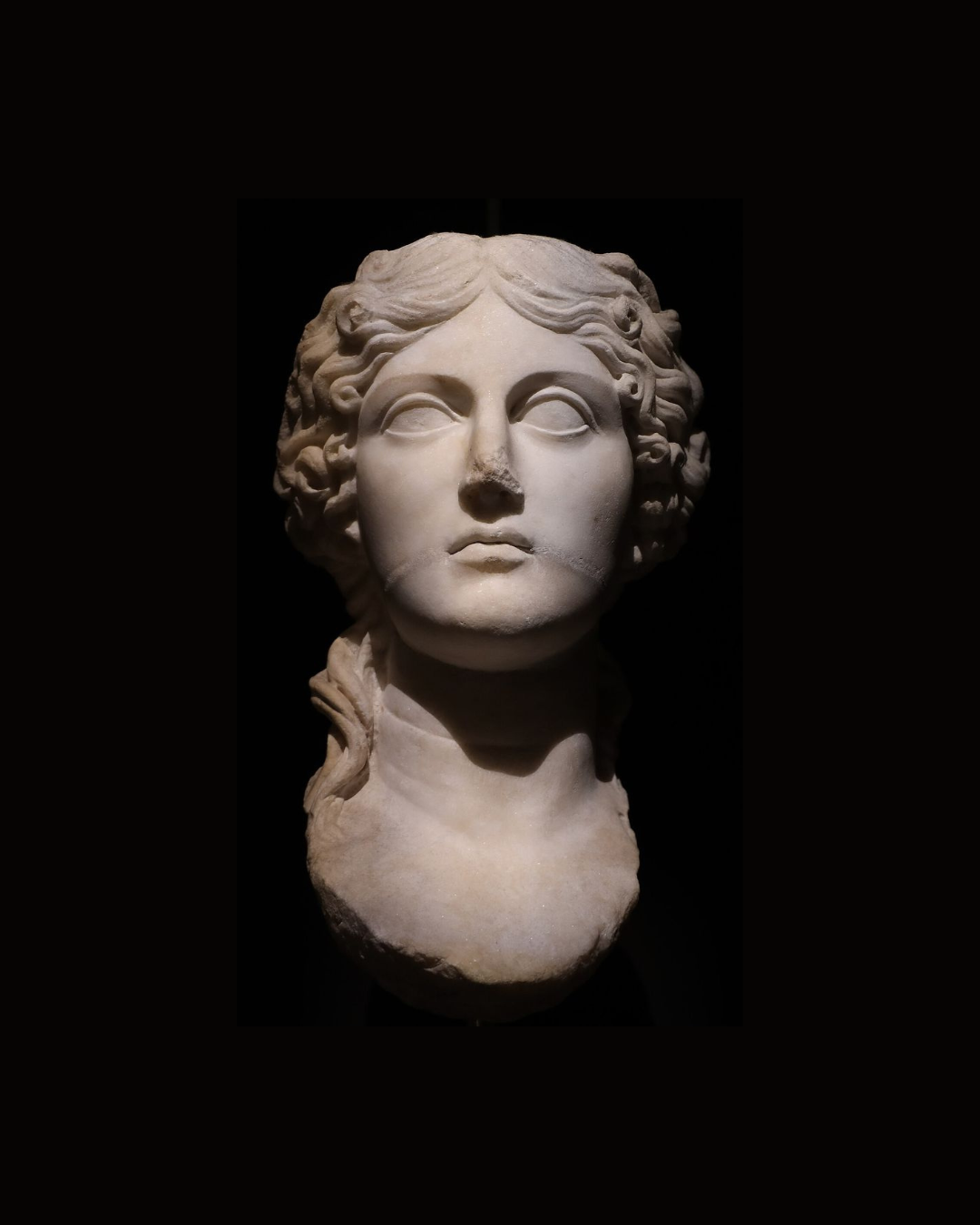
The former emperor was gone. His family had been sent to hell. What was left pertaining to him were his sisters, Agrippina and Livilla, both of whom were in exile.
Though the new emperor, Claudius, had had his misgivings about his nephew’s rule, his didn’t condone his murder. In his eyes, the men who had sworn to protect him, had violated their oath. Regardless of the plausibility of their reasons, this amounted to treasonous betrayal. He didn’t put them all to death, he just made a scapegoat of Cassius (who respectfully asked to be slayed with his own sword).
He then recalled both of Caligula’s sisters who promptly returned to Rome, entombed their brother and continued their lives as politically disgraced outcasts. Disgraced, yes. But tides turn.
Agrippina would later be remembered as ruthless, ambitious, and unrelenting in her thirst for power. And in time, she proved it.
___________
Something must have radically changed in Agrippina during those years in exile. She must have come to the conclusion that the only safeguard against ruin was power. Was it not power that had destroyed her family, that had drove her into exile, and that had kept her reckless brother untouchable for so long? Was it not?
Yes, her brother had granted her and her sisters extraordinary privilege before things went south, but these were merely ceremonial, at best reflected power, not real power. As a woman, she knew she could not practice power openly, only from behind the curtain, but even that path had failed. Lepidus’ failure had made it clear that no one else could be trusted to act with precision.
Her husband, Domitius, was dead. In any case, she wouldn’t have trusted him enough to use him. But she had Nero. This time, she would do the scheming herself. Her conclusion from that point was that absolute power was the goal and that securing it for herself through him would be her purpose.
Now four years old, Nero left the devoted care of his aunt, Domitia, and reunited with his mother.
And so, the plot began, again.
____________
The man Servius Galba was physically strong. Rumor had it that he once ran alongside Caligula’s chariot for twenty miles. Beyond this physical strength, he was a descendant of a distinguished family and at various times in life, had held several prestigious positions and amassed significant wealth. This made him a prime Agrippina target.
There was one little problem, though: he liked men. Strong, fully grown men in particular extra capable of humping him nicely. And there was another problem. He was married anyway and was one of those traditional husbands who believed in remaining faithful to his wife.
Agrippina might have stood a chance navigating this second obstacle, but how does one seduce a man who risks losing everything by getting caught in bed a gender he’s not even attracted to? Makes no fuckin’ sense, but she tried anyway. Galba turned her down, but she didn’t give up. She pressed her luck repeatedly until the day she tried it in public and earned a slap for being too forward. That was that for that.
Next, she turned her attention to a nobleman, Gaius Passienus.
Passienus was one wealthy, wealthy guy. He was known for being witty, fun-loving and humble despite his privileges. He was a senator, was once a consul and on his way to doing even greater things. He was also the husband of Domitia, the aunt whom Nero had lived with.
Agrippina must have been extraordinary in bed, charm and flattery, for not only did Passienus divorce Domitia, he also went ahead to wife her. Six years later he was dead. Agrippina had worked on him, persuaded him to name Nero as his heir, then had him poisoned. He was worth an estimated 200 million sesterces (some 3/4 of a billion dollars), all of which went to Nero.
She was hardly done. Following the death of Passienus, she entered a romantic relationship with Marcus Pallas, a man of remarkable standing. See, Marcus had once been a slave, but his brilliance with finances had earned him freedom and elevated him all the way to the powerful position of Secretary of the Treasury under Claudius. He was worth an estimated 300 million sesterces.
Meanwhile, Claudius, ever unfortunate in love, had a habit of choosing women who did not choose him back. His wife at the time, Messalina, was nothing short of a cock-thirsty whore. If Agrippina was evil, then Messalina was evil unchained. She was Domitia’s sister’s daughter (basically Nero’s first cousin) and matched her mother in temperament. Everyone whom she considered a threat, she eliminated faster than they even realized. Agrippina soon found herself in her sights, as Messalina sensed that Nero could one day challenge her own son’s position. She very well might have succeeded in eliminating them both had she not made a fatal mistake.
In Claudius’ absence, she went so far as to marry her lover. It was a mock wedding, but an embarrassment that bold was too much to ignore. Long story short, she was executed.
This is where Agrippina came in, and quite precisely, with the backing of Marcus who influenced Claudius to marry her. An uncle marrying his niece in those years was considered incestuous, but the last fuck Agrippina had to give had already been given since she was 13.
In the space of 8 short years, she had risen from exile to empress.
_____________
Emperor Claudius was not a particularly strong ruler. A man with a reputation for being “easily persuaded”, he was an effective administrator, hardworking and diligent and all, but was anything but strong.
When Messalina embarrassed him by marrying another man, he was furious, but in little time his heart had begun to soften. He might have taken her back had a guard not taken the initiative to end this imperial shame by running a sword through her. Records have it that when news of her death reached him, he simply asked for another cup of wine and moved on. This was the man Agrippina now had in the palm of her hands.
Agrippina was swift to action, eliminating or influencing her husband to eliminate several key people she perceived as threats. Now, two remained; Messalina’s’ children, her son Britannicus, and her daughter, Claudia Octavia.
To further strengthen Nero’s position to the throne, she falsely accused the man betrothed to Claudia Octavia of incest (he would later commit suicide), had her engaged to Nero (whom he would later marry), did everything in her power to estrange Britannicus from his father, and pressured Claudius to officially adopt and make Nero his heir.
It would appear that Claudius had begun to regret marrying that woman for this was apparent in how he began to make amends with Britannicus and prepare him for the throne.
He didn’t know it, but he was a dead man walking. Agrippina had him poisoned.
Now that he had been safely and quietly dispatched to the afterlife, she kept his death a secret long enough to secure the succession of her son by securing oaths of loyalty from the Praetorian Guards, then bullying confirmations off the Senate. Which is exactly how the world got introduced to another good man, Emperor Nero. He was 16.
______________
Two people were largely responsible for emperor Nero when he assumed power. Nay, three. His mother, one, his tutor, Seneca the Younger, and three, the head of the Praetorian Guard, Sextus. Two of these advised the best they could, hoping he listened. As far as the last was concerned – whom I am quite certain you might’ve guessed correctly – she saw him as a little more than a tool under her thumb. (It might have been four had Domitia, Nero’s aunt, not been eliminated by Agrippina).
He was a rebel from the start, but not in the way rebels are expected, preferring the simple pleasures of theatre to the difficult task of managing the empire. He accorded more independence to the Senate, banned secret trials, capital punishment and games of bloodshed, and took part in artistic competitions.
For the first few months, the boy did as he was told and went as he was led, granting her extraordinary privileges. Her portrait appeared on the coins; an honor traditionally reserved for the emperor. Lictors who were symbols of official state power and typically assigned only to magistrates were given to her. Two, in fact. She attended Senate meetings, rode publicly with Nero, and managed state affairs. In effect she had become the de facto ruler.
This lasted a few months until the boy got fed up with being a bitch. The turning point in their relationship came later that year when a delegation from Armenia arrived Rome. It is said that Agrippina had tried to take her place beside him on the tribunal, as if she ruled with him. Seneca and Sextus had warned against it, and it seemed the boy had finally, finally grown a pair for this time, he stepped up and stopped her.
To further assert his newfound dominance, he abruptly dismissed one of her strongest allies, Marcus Pallas, from his post as head of the treasury. And when his mother, sensing her hold on him was slipping, threatened to back the 13-year-old Britannicus, Nero moved quick and promptly had the boy poisoned at his own banquet.
They say the first kill increases blood thirst. This was no exception.
___________
Claudia Octavia lived in constant fear. Her brother had just been murdered, and here she was, trapped in a loveless marriage with an unpredictable emperor who held the power to violate her life the instant he felt like. Many times, in the past, he had attempted to strangle her. She grew close to Agrippina, who was herself slipping out of Nero’s favor. This closeness wasn’t so much one built on affection as it was about vulnerability and a mutual enemy.
Hoping to pull him further from his mother’s troubling influence, Seneca and Sextus introduced him to a to a freedwoman called Acte whom he grew deeply attached to. This fondness quickly grew into obsession, and before long the young man was speaking of marriage, even going as far as attempting to fabricate her genealogy to make that a possibility. Agrippina was furious! Despite her efforts to drive a wedge in it, including incestuous advances, it only made him all the more obsessed with Acte. This relationship would endure for three years, and that Acte survived it at all is something of a miracle, because knowing Agrippina’s tendency to eliminate rivals, who knows?
The woman who took the place of Acte was Poppaea, the wife of Nero’s very good friend, Otho.
Now, things were really getting out of hand.
She had lost a small amount of influence while he was with Acte. She had been stripped of her personal guards and had been forced to leave the imperial palace. She’d been forbidden to appear with him in public and also been denied the honor of meeting with high-ranking officials. In less than two years of his ascension to the throne she’d been forced out. All these had happened with a former slave, how much more a noblewoman like Poppea?
There Poppaea and Agrippina had history. Poppaea’s first husband, Rufrius Crispinus, had been the head of the Praetorian Guard during the first 10 years of the reign of Claudius. This was until Agrippina had him removed because she regarded him as loyal to the deceased Messalina's memory.
With the boy slipping more and more out of grasp, Agrippina began to make her move, plotting to support and place Plautus, Nero’s second cousin, in power.
The story of Rubellius Plautus is a sad one. He was not the problem, nor were his intentions for he had none. Wealthy as he was, he lived simply, old-fashioned in taste and uninterested in power or the spotlight. The problem was Agrippina’s intent to back him and the strength and legitimacy of his claim to the throne, considering he was a direct descendant of Tiberius.
First, Nero had him exiled. Two years later, prompted by false rumors of a rebellion, he had him assassinated. When Plautus’ head was brought to him, he mocked the man’s nose. It hardly ended there. He went further to have his widow, children and father-in-law executed.
There was still the problem of Agrippina whom he had exiled. As long as she was still alive, in his opinion (and Poppaea’s), she was a huge danger. This, together with Poppaea’s constant teasing, referring to him as a “mummy’s boy” prompted his decision to send her the way of her forefathers.
The first were three attempts at poisoning which didn’t work. Being a murderer herself, it was second nature to extra care in making sure she didn’t survive the same fate. Locusta, a formidable poisoner, was linked to her, giving her antidotes to such an extent that she had become virtually un-killable through whatever kind of poison there was.
The second attempt was devised by Nero’s Commander of the Fleet. It was a ship designed to cave in and collapse at some certain point. Agrippina knew this plan but went ahead to board it. Out at sea, the vessel gave way, and the ceilings and beams came crashing down. Only reason she survived was that the thick sofa had she sat on tipped over and formed a barrier that spared her from getting crushed. Her friend who was screaming her name in the hopes of getting saved was clubbed to death, while Agrippina herself swam to shore and fled, sending Nero a message that she had survived.
At this point Nero was simply fed up with her refusal to die so he straight up sent assassins.
According to historical accounts, Agrippina seems to have made peace with her end, making no attempt to escape. Years before her death when she had inquired from astrologers on what would become of her son, they had told her that he would become emperor but would eventually kill her to which she replied, “Let him kill me, as long as he becomes emperor.”
She faced them squarely with her abdomen exposed, asking them to strike her there.
They did. Moments later, she was dead.
When Nero later inspected her body to make sure she truly was, he praised her, he mocked her, and then went to have some wine. In a letter to the Senate informing them of her death, Nero made it clear that Agrippina had orchestrated his overthrow and had committed suicide to escape punishment.
She was ‘buried’ in an unmarked grave (which was left uncovered for the remainder of her son’s reign).